


The fantastic journey of the solar industry started all the way back in 1839, when the photovoltaic effect first was discovered. I myself became involved in this adventure around 150 years later, in the early nineties. I had just started elementary school when my father began his career in the PV industry.
At the time solar cells were switching from round small cells to 4-inch pseudo square cells and the technology escalation was already under way. The solar cells were so thick that you could easily drop them on the floor without breaking them and they were hand-soldered. Now most production steps, including interconnection soldering, are executed using sophisticated equipment, resulting in a significant reduction in assembly costs while also guaranteeing a more stable quality. The manual soldering generated high quality, but ensuring quality consistency was a more difficult task.
Remarkable developments in supply chain optimization has led solar energy not only to be considered as a clean energy source, but is now officially recognized as one of the cheapest energy sources available, beating coal, nuclear and gas in most major nations.
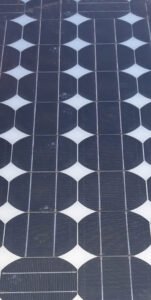
In 2003, after finishing high school, I moved to Italy to pursue my carrier in the industry. During these 18 years, being directly involved in the photovoltaic industry, I have had a first-hand experience of several stages, that I’m remembering back in this blog, that have undoubtedly had a profound influence on the development of the photovoltaic industry.
In 2000, Germany launched the first feed-in tariff to incentivate the use of renewable energy and countries like Spain and Italy followed suit a few years later. Thanks to the heavily incentivized European market, photovoltaic culture spread quickly across Europe as a sustainable and a profitable energy choice.
In 2005-2006 the incentive-driven European market had created such an unexpected boom that there was a severe shortage of the main material used to make panels: polysilicon. Expanding polysilicon production capacity was far from a quick and simple task and shortages ensued for several years.. During these years of silicon shortage, new panels were launched made out of the less pure metallurgical silicon to respond on the market’s appetite for panels. This panel type didn’t last long though as it couldn’t reach the same module efficiency and quality as the much purer 99,999999999 polysilicon. So once the polysilicon became available again this panel was quickly out of business. Ah, one more very important thing to add…
In 2005 the first Asian companies started to attend at the yearly PV exhibitions and conferences. I can remember just a hand-full of them at the PVSEC fair in Barcelona that year…
Unfortunately further shortages occurred in more or less the same period; volumes of the patent protected Tedlar, the main component used in the back sheet, fell short of high market demand. Patent protection made it difficult to meet new capacity and so important developments emerged in the pursuit of alternatives to this material. The flip side to this was that many back sheets were maybe launched a bit prematurely on the market (years later many panels are now affected by severe quality issues due to this) but hey, the market was starving for panels… Such intense development caused a hike in raw material prices; new alternatives were much more cost competitive than the good old Tedlar.
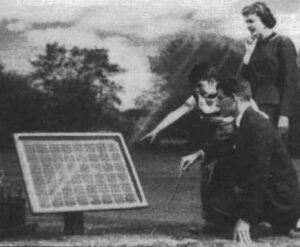 From 2009 onwards, the silicon shortage problem seemed to be long gone and prices plummeted: years of process optimization, technology development and the implementation of new production capacity drastically reduced silicon and module prices; an abundance of new players on the market flipped shortage into overcapacity. The overcapacity made module prices fall even faster and European module manufacturers were in big trouble, sadly leading to the closure of many manufacturing units.
For years Europe had incentivized the spread of photovoltaic culture across Europe through the final consumer; Asia on the other hand and China in particular, started to drive and support manufacturing companies, resulting in the rapid growth of strong companies.
Another important milestone was reached in 2017, when China launched a new program incentivizing local industry to mass-market highly efficient solar cells. This move made China a driving factor for global photovoltaic Research and Development and Chinese solar panels went from being considered cheap and low-quality to high-tech, high-end and affordably priced products.
Sadly, after more than a decade of heavy (perhaps sometime also excessive) incentives, Europe lost its pole position as photovoltaic technology developer and found itself also without supply chain.
So where did Europe go wrong? My opinion is that we should surely be grateful for the period of incentives as it helped to spread photovoltaic culture across the nations, but we need to be aware of how important factors maybe were not taken into account. Just as a small example concerning technology development; during the period of incentives, in Italy the “Conto Energia” was rolled out with stringent bureaucratic requirements set for tariffs, making it unsustainable and economically unfeasible for manufacturers to invest in new products as they wouldn’t immediately fulfill with the stringent requirements (for example the integrated photovoltaic tariffs for which only already patented components were considered innovative). Instead, companies had to focus on aligning with regulations, investing large amounts of money and time on a number of company and product certifications. So, instead of motivating technology development, it actually hindered it in many cases.
As previously mentioned, in economical terms Europe heavily incentivized the end user, leaving the supply chain to bear the brunt of all costs. We must remember that the photovoltaic industry did create thousands of jobs in Europe and there should have been an appropriate industrial policy to support companies, not only to maintain the new industry but also to encourage its growth, as the bright future of renewable solar energy had already been forecast.
The final nail in the coffin came in 2012, when important tariffs were brutally cut and the market was plagued by overcapacity and plummeting prices … unfortunately it was game over for the European supply chain.
Fortunately, the photovoltaic supply chain continues to blossom, although not in Europe and with the contribution of difficulties turning into opportunities, photovoltaic energy is now recognized as a sustainable, affordable and reliable energy source.
Glimpses of the production cost of a poly panel back in 2007…
| Poly solar cell | 2,23 € / Wp |
| Bill Of Material | 0,33 € / Wp |
| Total production cost | 0,44 € / Wp |
| Total module cost | 3,00 € / Wp |
Surely we are yet to experience the full potential of the photovoltaic era; power in the future will be in the hands of those who harness energy from the sun and not from oil.
As far as photovoltaic energy is concerned, considering that since my childhood it has always put daily bread on the table, I certainly hope that the photovoltaic supply chain will prosper once more, in Europe too.
2004 – my first-time presenting N-type technology;
a 5-inch bifacial cell developed by Russian friends.


