


In the transition to cleaner energy sources, solar power has emerged as one of the most accessible and sustainable solutions. But as solar panels become more widespread, a fundamental question arises: how do we integrate this technology into our daily lives in ways that respect not only function but also form?
At FuturaSun, we believe the future of photovoltaics lies in their ability to harmonize with the environments we care about most — our homes, our cities, and our heritage. Solar energy must not be a disruptive presence, but an integrated extension of the spaces we inhabit. We are convinced that clean energy can be part of everyday life without compromising beauty, history, or design.
The Challenge of Integration: Technology and Aesthetics
Solar panels have traditionally been designed with efficiency in mind, often with little consideration for how they might affect the look and feel of a building. Yet architecture — whether historical or contemporary — holds cultural, emotional, and functional value. In our Italian heart we know that respecting that is not only a matter of taste, but of responsibility.
This is where coloured photovoltaics come into play: modules specifically designed for architectural integration, crafted to blend with different materials and styles, from terracotta roofs in heritage buildings to sleek grey facades in modern homes and commercial structures.
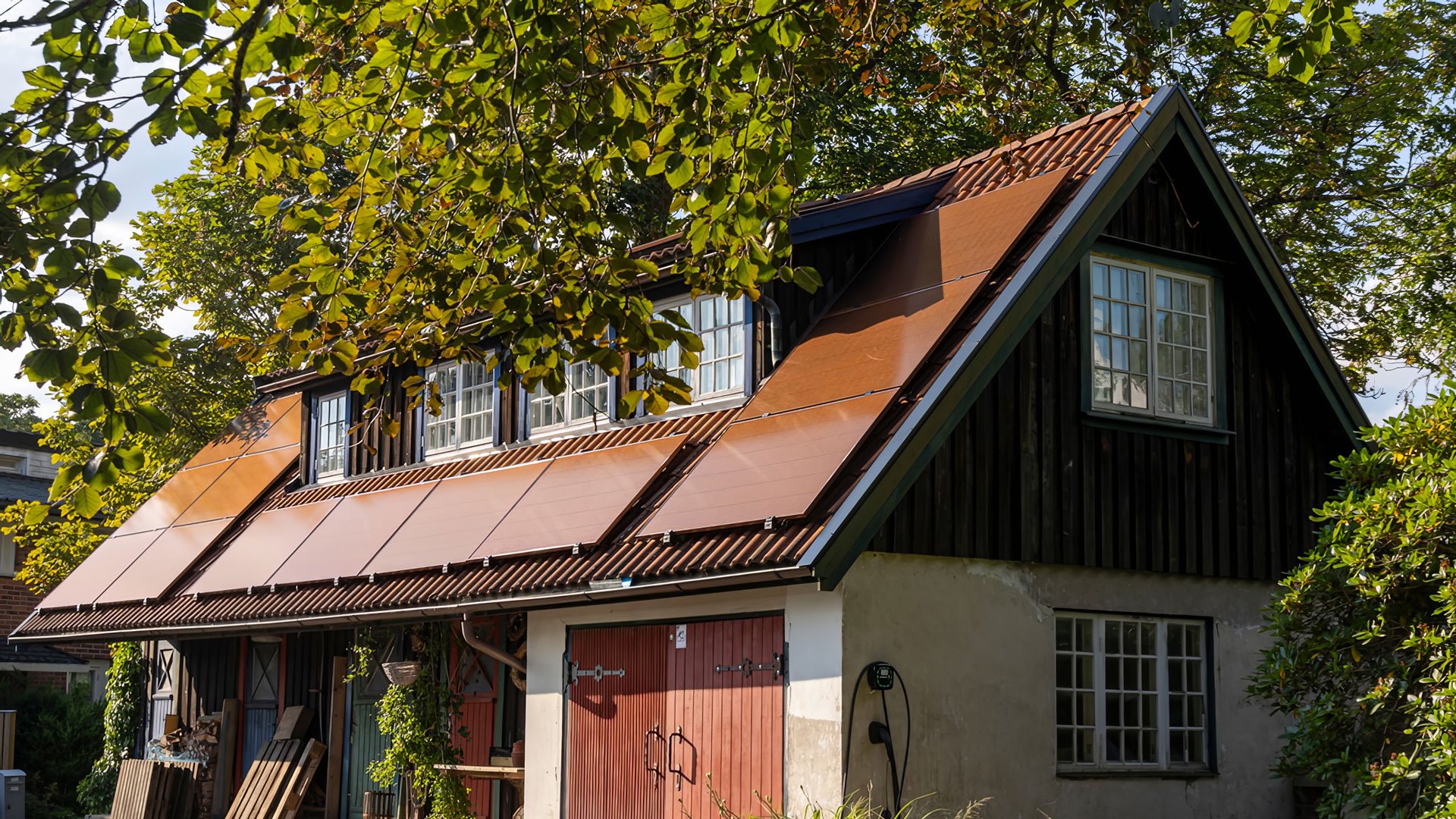
The key lies in the glass. Coloured glass is achieved through specialized treatments, including ceramic-based coatings or nano-structured layers, which give the surface of the module a particular hue. Whether it’s earth-toned red, muted grey, or a more customized shade, this technology allows the modules to visually integrate with their surroundings.
A Trade-Off Worth Making?
Coloured glass, however, does come with a trade-off. The process that gives the glass its colour also reduces the amount of sunlight that reaches the photovoltaic cells, slightly lowering the module’s efficiency compared to standard clear-glass panels. But innovation in solar cell design has narrowed this gap. By using high-efficiency cells and optimizing the module’s internal layout, we can ensure excellent performance even with coloured glass.
In real terms, this means a coloured module may generate slightly less energy per square meter, but its overall performance remains excellent and suitable for meeting the energy needs of homes and buildings. Importantly, this is achieved without compromising the aesthetic value of the structure — a balance that is crucial in sensitive architectural contexts.
From Iconic Buildings to Everyday Spaces
FuturaSun’s coloured modules have already been used in projects that range from high-profile architectural landmarks to everyday residential installations.
In Bilbao, on the roofs of the iconic Guggenheim Museum, our Silver modules were integrated into a project requiring the highest standards of design and discretion. The result is a photovoltaic installation that supports sustainability goals while complementing the modern art and architecture of its surroundings.
Further north, in Sweden, a picturesque “Sun Farm” is now powered by 19 discreet Silk Nova Orange modules — designed not to stand out, but to blend with the natural landscape and the home’s fairytale-like design. Here, the solar panels provide energy independence without altering the character of the building.
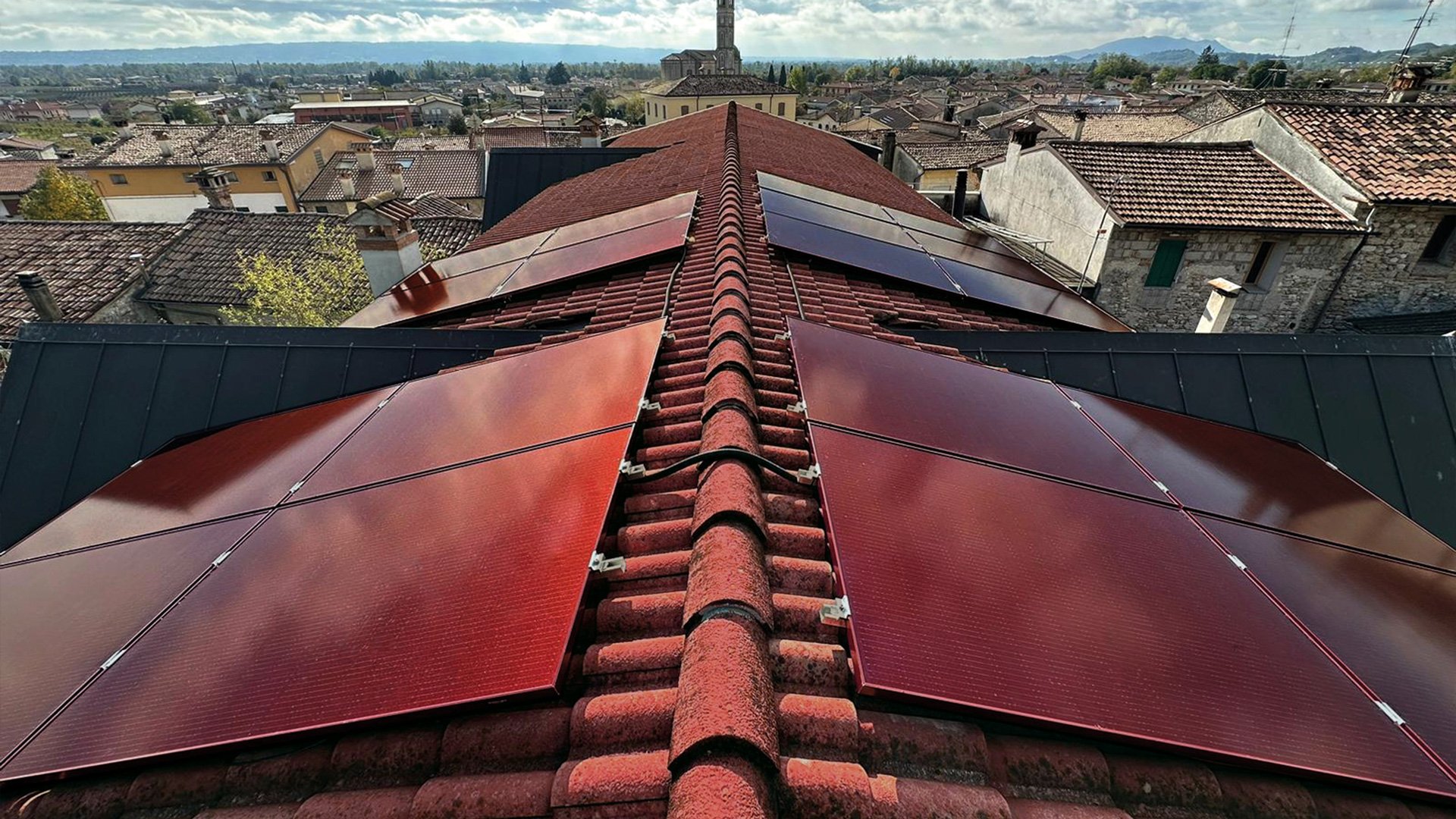
Down south, in our home country, 18 red modules blend on a traditional tile roof overlooking a historic church. Set under the deep blue Italian sky and among the stone buildings of a centuries-old village, the installation integrates with its surroundings, preserving the visual harmony of the local heritage — an example of how solar power can support not only modern needs but also cultural legacy.
Finally, in Germany, we’ve taken a more functional approach. Grey modules installed on a carport roof serve a dual purpose: offering shade and weather protection for vehicles, while generating clean energy: an example of how photovoltaics can enhance the utility of everyday structures without adding visual clutter.

Toward a Harmonious Future
As cities and communities worldwide embrace renewable energy, the challenge is no longer just about producing more power — it’s about producing it intelligently and respectfully. Photovoltaics must become part of the architectural language of our time, integrated into the shapes, colours, and materials that define our spaces.
At FuturaSun, we believe sustainability and beauty are not opposing forces. They can — and must — coexist. Through innovation in solar technology and a deep respect for what makes our cities special, we are working toward a future where energy is clean, buildings are efficient, and the character of our spaces remains intact.


